
Table of Contents
ZÜRICH — FIFA announced Monday that the 2026 World Cup, co-hosted by the United States, Canada, and Mexico, will introduce a multi-ball format for all matches played on American soil, citing “the evolving entertainment expectations of host nation audiences” and a need to “ensure the tournament remains accessible and engaging across diverse viewer demographics.”
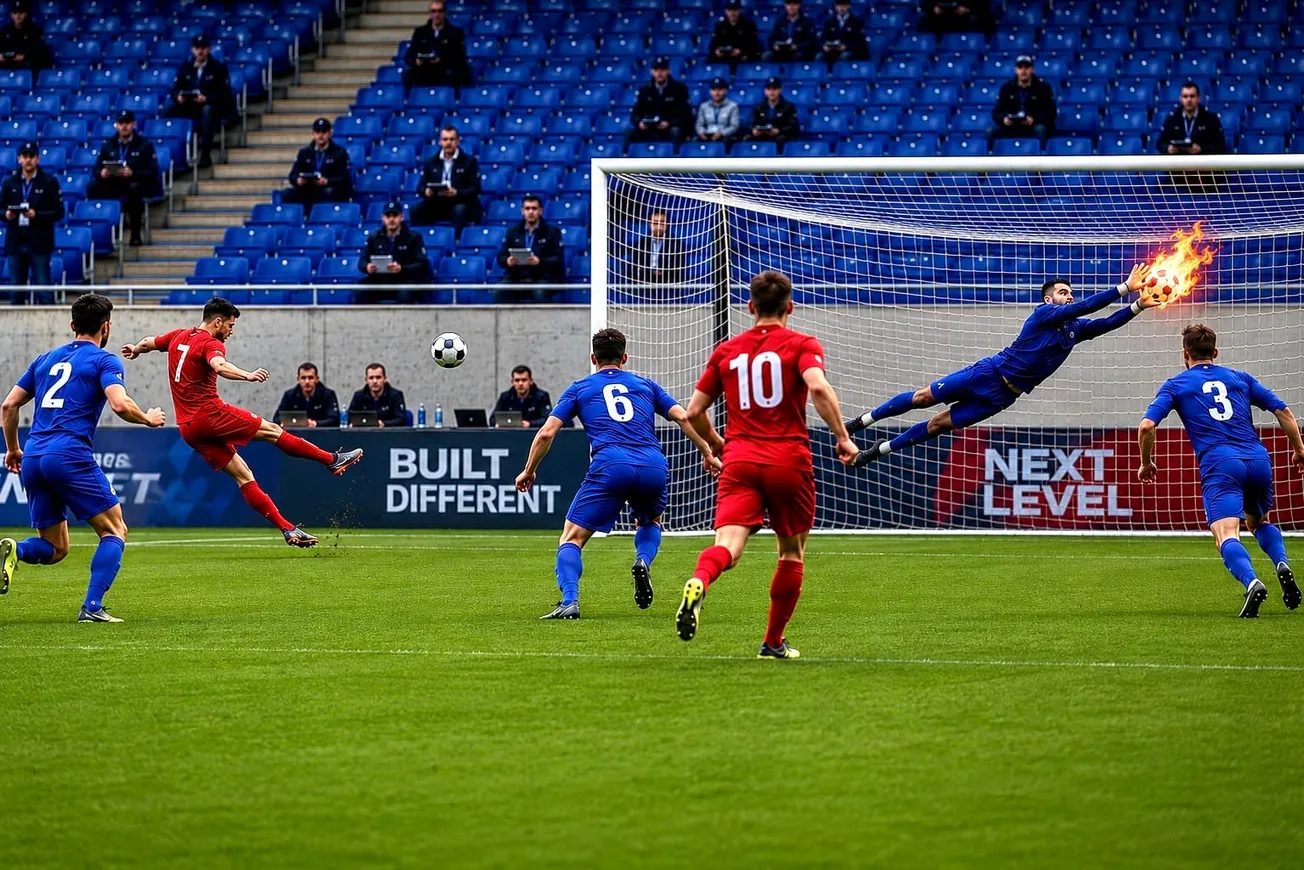
Under the new format, a second match ball will enter play at the 60th minute and a third “fireball” will be introduced during stoppage time. Both additional balls are fully live and the fireball burns for approximately fifteen minutes under standard atmospheric conditions. Goals scored with any ball count equally toward the final score.
“We are confident this format will enhance the pace and unpredictability of play in a way that honors the sport’s global traditions while meeting fans where they are,” said FIFA President Gianni Infantino at a press conference in Zürich, gesturing toward a large wall-mounted graphic labeled “INNOVATION ROADMAP 2026.”
Canadian and Mexican venues will not use the multi-ball format. FIFA’s announcement noted that those matches will proceed under “standard global competition rules,” a phrase that did not appear in any previous FIFA documentation and has since been added to the organization’s website.
The announcement has drawn criticism from football associations across Europe, South America, and most of Asia, with UEFA issuing a statement calling the format “a fundamental misunderstanding of what football is.” Germany’s national team coach described it as “genuinely upsetting.” The Korea DPR Football Association issued a statement calling the format “a bold and necessary evolution of the sport” and expressed hope that a future North Korean squad would have the opportunity to compete under it. North Korea did not qualify for the 2026 World Cup.
FIFA’s Competition Committee noted in an appendix to the announcement that the multi-ball format had been in development for “approximately eleven days” following a survey of American sports consumption habits, the methodology of which was not released. A separate Deloitte report commissioned to assess fan readiness found that American viewers exhibited “significantly elevated disengagement during scoreless second halves” and expressed “a strong cultural preference for tie resolution and violence.”
A goalkeeper who suffered second-degree burns over 50 percent of his body during a closed test match allegedly increased American test audience enthusiasm by 97 percent.
Referees will receive four additional hours of training and fire-retardant uniforms. Attendees at U.S. venues will receive a laminated card explaining the format at the gate.
“This is still football,” Infantino said, when asked by a reporter whether this was still football. “Absolutely, yes. This is football.”
The laminated cards are being printed in English only.