
Table of Contents
WASHINGTON — The United States has officially renewed its conflict with Iran for a second season, the Pentagon confirmed Friday, despite the original run posting the worst audience approval numbers since the Iraq franchise and what one network source described as “a finale that resolved nothing and satisfied no one.”
In what insiders described as a “highly unusual move,” the second season launched the same day its renewal was announced, barely two days after both sides signed a 14-point memorandum of understanding that industry observers widely interpreted as a series finale.
“We feel there’s more story to tell,” said a senior Israeli defense official, who declined to specify what that story was or who had asked for it.
A U.S. defense official, who spoke on condition of anonymity, described Season 2 as "not something we would have developed for the U.S. market," but acknowledged the show was a hit with key Israeli audiences.
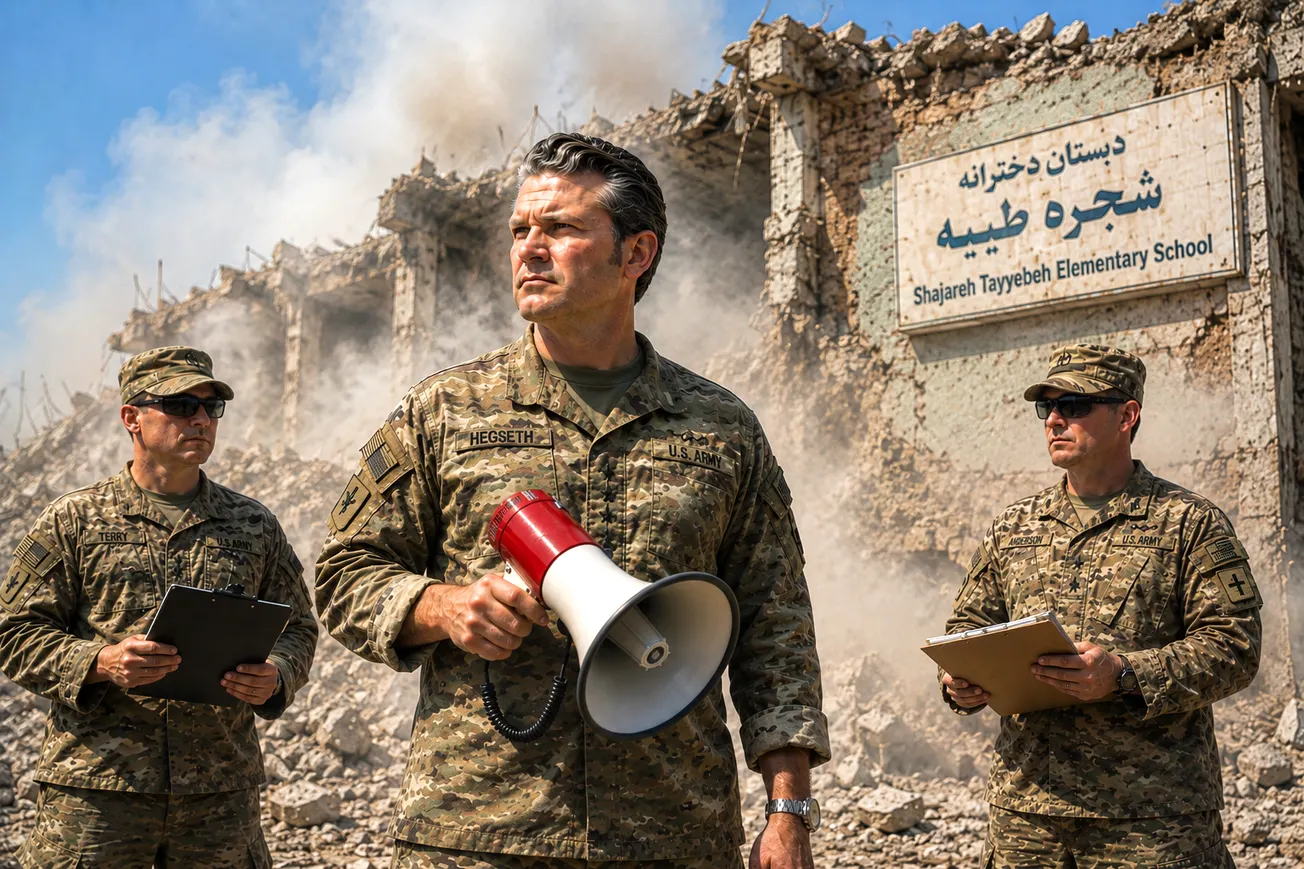
Season 2 kicked off overnight with Episode 1 resuming the conflict almost immediately after the Season 1 finale, opening with Israeli strikes on southern and eastern Lebanon — a “tired subplot” that “lacked the emotional gut-punch that the season 1 opener delivered,” according to Variety. S1E1 featured the bombing of Shajareh Tayyebeh Elementary School in Minab, Iran.
Lebanon’s Health Ministry confirmed at least 21 people were killed, and Israel said four soldiers died in the early morning strikes.
The premiere also included a trailer for the studio’s upcoming Greenland acquisition project, with the tentative title “Operation: Frozen Assets.” While it didn’t include an exact release date, the trailer ended on “Thawing Summer 2027.”
Critical reception to Iran War season 1, which currently holds a 7% on Rotten Tomatoes, was brutal. Reviewers noted that the conflict, which premiered February 28 with coordinated U.S.-Israeli airstrikes on Iranian military and government targets, introduced too many subplots simultaneously, relied heavily on assassination set pieces in the opening episodes, and pivoted in its back half to an extended naval blockade arc that disrupted global trade, cost Iran an estimated $500 million daily, and left audiences exhausted.
Sources close to the production say showrunners have clashed repeatedly over creative direction, with rookie studio head Pete Hegseth pushing to wrap the series following its decline in the ratings, and Israeli National Security Minister Itamar Ben Gvir submitting new scripts faster than they could be rejected. Gvir this week pitched what he described as a “massive escalation” arc, with all of Lebanon serving as a primary location. Hegseth did not endorse the pitch. Production began anyway.
Iran called the renewal “illegal under international law” and announced it had begun preproduction on a competing project.
Season 2 has no confirmed episode count, no announced cast changes, and no logline that differs in any meaningful way from Season 1. Funding for Season 2 was allegedly drawn from the final season of the Supplemental Nutrition Assistance Program, which concluded earlier this year after 45 critically acclaimed seasons.